
Views: 0 Author: Site Editor Publish Time: 2026-05-08 Origin: Site
When choosing exterior materials for a new build or renovation, budget often dictates the final selection. Buyers frequently ask whether an Aluminum-wood Door costs less upfront than a solid wood alternative. In most cases, the answer is yes. A high-quality Aluminum-wood Door or architectural aluminum door system generally offers better upfront cost-effectiveness than a premium solid hardwood door, while cheap hollow-core wood remains only a low-end budget option.
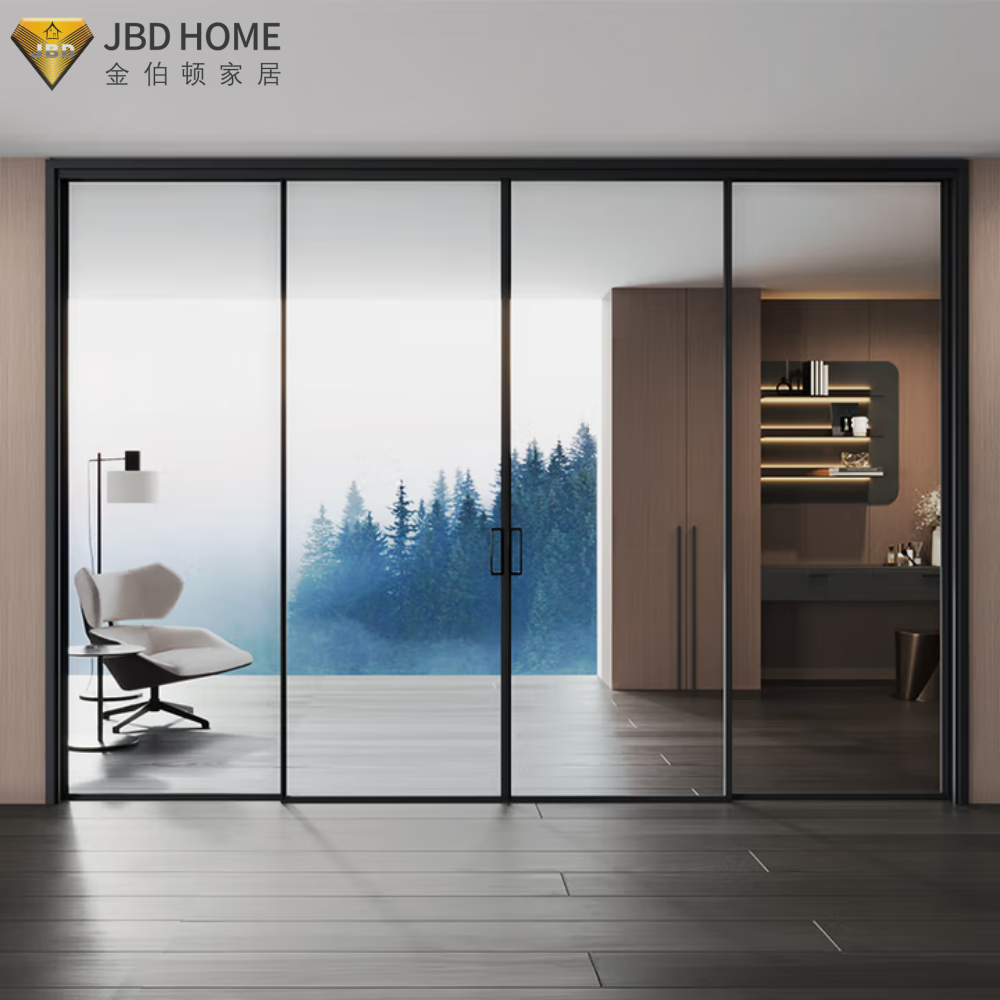
However, making a purchase based solely on the initial sticker price is a dangerous game. You must base purchasing decisions on the Total Cost of Ownership (TCO). That means factoring in installation complexity, long-term maintenance, durability, and overall lifespan.
To make a fair comparison, we need to establish a realistic baseline. We will compare commercial-grade or architectural Aluminum-wood Door systems with solid hardwood doors, while completely excluding hollow-core wood because it is unsuitable for exterior or commercial applications. Read on to discover how manufacturing economics, shipping logistics, and climate endurance can shape your final investment.
Upfront Cost: Aluminum offers scalable manufacturing economics, typically pricing 25-35% lower than custom solid hardwood.
Hidden Expenses: Wood’s weight increases shipping logistics, installation hours, and mechanical wear on hardware (hinges, openers).
Maintenance ROI: Aluminum requires minimal upkeep (wipe-downs), whereas wood demands intensive recurring labor (sanding, resealing) to prevent rot.
The Hybrid Solution: An aluminum-wood door (or wood-grain sublimated aluminum) eliminates the aesthetic compromise, delivering a natural look with industrial durability.
Aluminum manufacturing relies heavily on industrial extrusion. Factories push raw metal through shaped dies to create precise frames. This process scales beautifully. Manufacturers can produce thousands of identical profiles at a rapid pace. Factory powder-coating then adds durable color finishes in massive batches. This scalability allows for significant volume discounts. Pricing remains highly consistent year over year. B2B procurement teams and developers love this predictability for large commercial builds. You get a high-performance product without unpredictable cost overruns.
Solid wood operates on an entirely different economic model. It remains highly labor-intensive. Crafting a proper hardwood entry requires specialized milling, intricate joinery, and extensive chemical treating. Artisans spend hours perfectly aligning natural grain patterns. This craftsmanship turns wood into a premium architectural choice. Consequently, wood carries a highly volatile price point. Lumber commodity prices fluctuate wildly based on global supply chains and environmental regulations. You pay a heavy premium for this organic artistry.
Buyers often make a critical mistake during cost comparisons. They compare high-end architectural aluminum against builder-grade hollow-core wood. This creates a false equivalency. Hollow-core products use thin veneers stretched over cardboard honeycombs. They fail rapidly outdoors. True exterior wood doors require expensive, dense hardwoods to survive the elements. Mahogany, teak, and white oak dominate this high-end category. When you compare commercial-grade metal against these premium dense hardwoods, metal almost always wins the upfront price war.
Material Category | Manufacturing Method | Price Volatility | Relative Upfront Cost |
|---|---|---|---|
Architectural Aluminum | Automated Extrusion & Coating | Low (Stable supply chain) | Moderate to High |
Solid Hardwood (Exterior) | Labor-intensive Milling | High (Lumber market dependent) | Very High |
Hollow-Core Wood | Mass Veneer Gluing | Low | Very Low (Not suitable for exterior) |
The Total Cost of Ownership extends far beyond the factory floor. Logistics introduce massive hidden costs. Natural wood remains highly vulnerable during transit. Ocean freight exposes timber to intense humidity fluctuations. Wood can easily warp, bow, or absorb moisture before arriving at the job site. You often lose money replacing damaged inventory.
Aluminum offers a stark contrast. It boasts an incredible strength-to-weight ratio. It entirely resists moisture absorption during shipping. You can pack more units into a single shipping container without exceeding weight limits. This durability significantly lowers your overall freight insurance and replacement costs.
Installation labor directly correlates to product weight. Standard solid exterior wood doors are notoriously heavy. A single hardwood slab can easily exceed 100 pounds. This creates several compounding logistical issues:
Increased Labor Hours: You need multiple technicians just to lift, plumb, and hinge a solid oak frame.
Hardware Fatigue: Massive weight puts immense long-term stress on structural components.
Motor Burnout: Heavy garage or commercial sliders rapidly degrade automated openers.
Heavy timber forces you to buy oversized hinges and expensive multi-point locks. Conversely, lightweight metal reduces on-site labor hours. It extends the lifespan of your mechanical hardware significantly.
Modern architecture demands massive glass openings and ultra-slim sightlines. Aluminum provides exceptional rigidity. It supports expansive double-glazed panels without breaking a sweat. You do not need bulky, expensive structural reinforcement to maintain frame integrity. Wood struggles in this specific arena. To support heavy glass safely, timber frames must remain thick and visually intrusive. If your design calls for minimalist aesthetics, metal structurally outpaces timber every time.
Maintenance defines the true cost of property ownership. Wood ownership carries a severe labor penalty. To prevent rot and sun damage, you must perform annual upkeep. This involves sanding down the old finish. You then apply fresh varnish or polyurethane. Finally, you replace swelling weather-stripping. This takes days of manual labor or costs hundreds of dollars in contractor fees annually.
Metal provides a "set-and-forget" reality. Anodized or factory-powder-coated finishes chemically bond to the metal surface. They never peel, flake, or blister. Routine maintenance simply involves wiping the frames down using soapy water. This minimal upkeep yields a massive Return on Investment over a decade.
Extreme environments ruthlessly test building materials. In high-stress regions, timber routinely fails. Freeze-thaw cycles cause cellular expansion in timber, leading to deep cracks. Coastal environments blast exteriors using abrasive salt air. Heavy commercial foot traffic quickly dents and scratches traditional timber thresholds.
Commercial-grade metal thrives here. Powder-coated finishes effortlessly repel coastal salt. Metal completely ignores freeze-thaw expansion. It handles thousands of daily impacts in retail environments without structural failure.
We must frame the expected lifecycle accurately. Commercial-grade extrusions realistically push past 30 years. They maintain complete structural integrity throughout this period. Wood lifecycles look vastly different. A premium timber frame typically ranges from 15 to 25 years. However, this lifespan depends strictly on absolute adherence to a rigid maintenance schedule. If you skip varnishing for two seasons, wood rot will aggressively shorten that timeline.
Historically, builders assumed timber was naturally better at insulation. Wood is indeed a natural insulator. Early metal frames conducted heat rapidly, creating cold drafts during winter. However, modern engineering has completely erased this historical advantage.
Manufacturers now use "thermal break" technology. They insert a reinforced polyamide plastic barrier directly into the metal extrusion. This breaks the conductive thermal bridge. Thermally broken frames achieve incredibly competitive U-values. In fact, many high-end systems now easily meet stringent Passive House standards. You no longer have to sacrifice energy efficiency to gain metallic durability.
Security goes beyond strong locks. A lock is only as good as the frame holding it. Timber expands and contracts during seasonal weather changes. This warping throws multi-point locking systems out of alignment. Over time, doors become difficult to latch securely.
Metal completely resists weather-based warping. It maintains exact factory tolerances over decades. This rigidity ensures multi-point locks engage perfectly every single time. Furthermore, heavy-gauge metal actively resists forced entry and crowbar attacks far better than splitting wood.
Property owners frequently feel torn. They desire traditional architectural aesthetics, but they desperately need modern industrial durability. You no longer have to choose one over the other. The definitive answer for these conflicted buyers is the Aluminum-wood Door. This hybrid approach bridges the gap perfectly. It delivers the warm visual appeal of timber alongside the unyielding strength of extruded metal.
Manufacturers create these hybrids using two primary engineering methods:
Sublimation Wood-Grain Technology: This technique uses high-heat vacuum processing. It infuses realistic wood-grain patterns directly into the powder-coated finish. It looks exactly like timber but feels like metal.
Solid Wood Cladding: This method uses a structural metal core. Manufacturers then attach genuine wood veneers to the interior-facing side. You get real wood inside the home and weather-proof metal outside.
While these hybrids are fantastic, you must shop carefully. When sourcing an Aluminum-wood Door, ask suppliers specific technical questions. Always inquire about their UV-resistant coatings. Subpar wood-grain foils will peel, crack, or fade under intense sunlight. Ensure the manufacturer uses architectural-grade sublimation powders or marine-grade sealants for clad variants. Taking these precautions protects your long-term investment.
Selecting the right material requires aligning your specific project constraints against product capabilities. Use the framework below to finalize your architectural specifications.
Your project demands ultra-slim sightlines and massive glass panes. Metal easily handles these modern architectural requirements. Choose this material if you require low maintenance and high-traffic commercial durability. It also serves as the ideal structural frame for integrating smart security locks, as it will never warp out of alignment.
Your property represents a strict historical restoration. Heritage boards often reject metal replacements outright. Timber is necessary if your design relies heavily on traditional artisan aesthetics. Importantly, only specify timber if your property management team possesses a dedicated, recurring maintenance budget.
The design requires a warm, organic visual appeal. Craftsman, farmhouse, or rustic modern styles demand this aesthetic. Choose the hybrid option if your local climate features brutal weather changes. It serves as the perfect solution when your budget cannot support the intensive labor required for solid timber maintenance.
Project Priority | Best Material Choice | Why? |
|---|---|---|
Modern minimalist aesthetics (slim lines) | Architectural Aluminum | Incredible structural rigidity allows for narrow frames. |
Strict historical preservation | Solid Hardwood | Meets local heritage board aesthetic requirements. |
Zero-maintenance rustic appeal | Aluminum-Wood Hybrid | Combines organic visual textures with weatherproof metal. |
High-traffic retail or commercial | Architectural Aluminum | Resists denting, scratching, and constant mechanical cycling. |
The final verdict heavily favors modern metal solutions. Aluminum decisively wins on Total Cost of Ownership. It scales structurally to support massive glass features and essentially eliminates recurring maintenance budgets. While genuine timber offers unmatched historical charm, its hidden logistical costs and intensive upkeep make it a risky long-term investment for standard commercial or residential projects.
If you remain undecided, take immediate action to evaluate these materials physically. We strongly encourage you to request physical material samples from suppliers. Visit a local showroom to test the weight of the frames in person. Inspect the finish quality of sublimated wood grains and verify the presence of modern thermal breaks. Touching the materials will solidify your final decision.
A: It depends entirely on the gauge thickness. Cheap residential metal skins will dent under impact. However, commercial-grade architectural extrusions feature thick, rigid walls. These robust profiles actively resist heavy impacts, shopping carts, and foot traffic far better than softwoods or hollow-core alternatives.
A: Yes, provided they feature modern engineering. You must specifically specify thermally broken frames. These models use an internal polyamide barrier to stop cold transfer. When paired with high-quality double or triple glazing, they easily handle extreme winters and can meet strict Passive House energy standards.
A: Modern manufacturing achieves astonishing realism. Factories utilize high-resolution digital printing and vacuum sublimation techniques. This bakes deep wood-grain patterns directly into the powder coating. While it feels metallic to the touch, the visual texture mimics real timber so closely it often fools architects from a short distance.
A: Aluminum is vastly superior for coastal environments. Wood rapidly absorbs moisture, leading to severe rot and swelling in humid, salty air. Properly treated metal, especially anodized or marine-grade powder-coated frames, entirely resists salt corrosion. It maintains structural integrity without requiring constant repainting.


